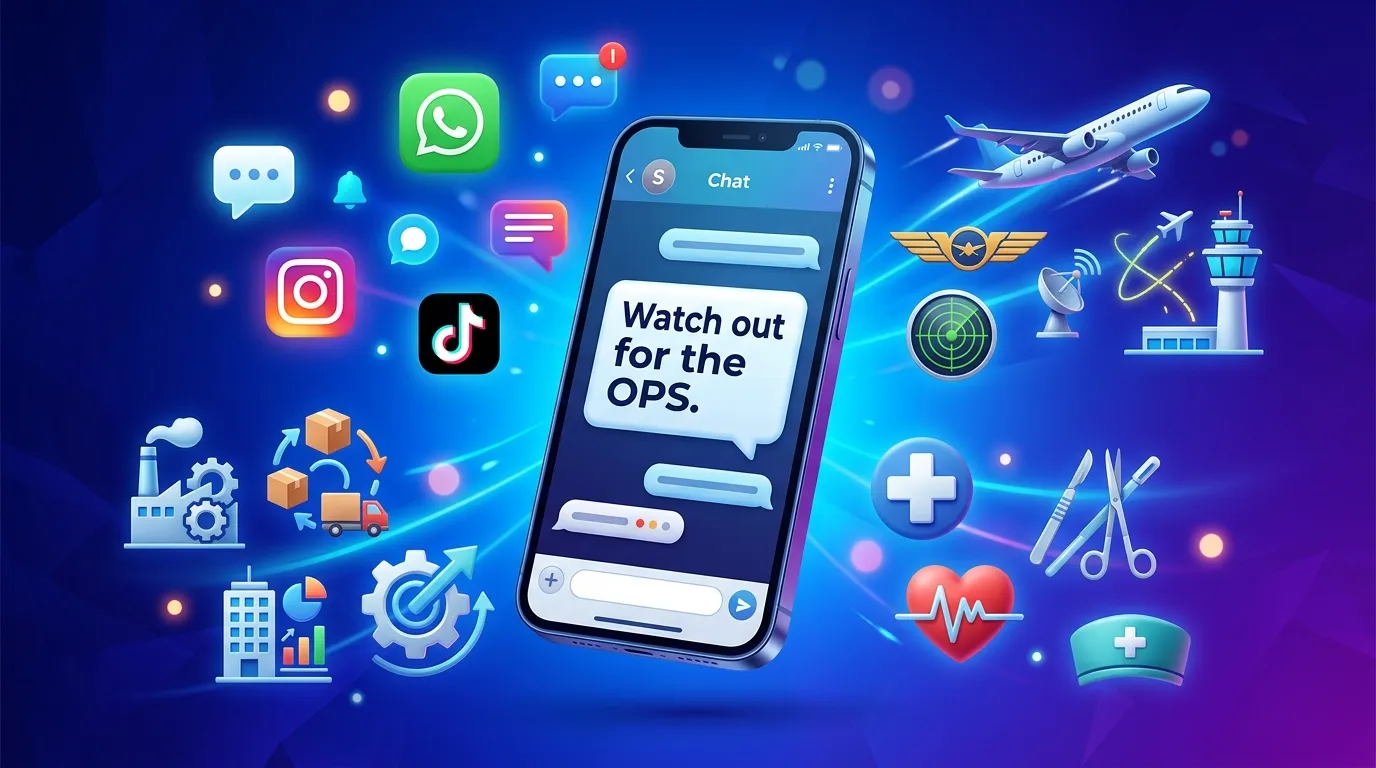
Have you ever received a message that simply said “OPS” and wondered what it meant? You’re not alone. Internet slang changes quickly, and short abbreviations like OPS can have several meanings depending on where they’re used.
If you’re chatting with friends, scrolling through TikTok, reading Instagram comments, or even looking at professional documents, the meaning of OPS can vary.
People search for ops meaning slang because they want to avoid misunderstandings in conversations. In casual online chats, OPS usually has a slang meaning, while in professional, medical, aviation, or scientific settings, it often refers to something completely different. Knowing the context helps you understand what someone is trying to say.
In this guide, you’ll learn the slang meaning of OPS, its origin, how it’s used across different platforms, and what it means in specialized fields. You’ll also discover common misconceptions, similar terms, and the best ways to respond when someone uses OPS in a conversation.
Meaning & Definition
The most common OPS meaning in slang refers to opposition or opponents. It is often written as “ops” instead of “opps,” although both spellings are common online.
In internet culture, calling someone an “op” or “ops” usually means they are:
- An enemy
- A rival
- Someone working against you
- A competitor
- Someone you don’t trust
The term became popular through hip-hop culture and later spread across TikTok, Instagram, Snapchat, and online gaming communities.
Simple Examples
- “Stay away from the ops.”
- “He’s hanging out with the ops.”
- “Don’t tell the ops our plans.”
In these examples, “ops” simply refers to people considered rivals or enemies.
However, outside slang, OPS may also stand for:
- Operations
- Operational Support
- Office of Public Safety
- Operating Procedures
This is why context is always important.
Background
The slang word ops evolved from the word opposition. It became widely recognized in urban communities before spreading through rap music and social media.
As musicians and influencers used the term in songs and videos, younger audiences adopted it in everyday conversations. Soon, gamers, TikTok creators, and meme pages began using “ops” whenever talking about rivals, haters, or competitors.
Today, the slang appears in:
- TikTok captions
- Instagram reels
- Snapchat stories
- YouTube comments
- Gaming communities
- Discord servers
- Group chats
Because of its popularity, many people now use “ops” jokingly, even when talking about friendly competition.
Example:
“My brother ate the last pizza slice. He’s officially one of the ops.”
Here, the speaker is clearly joking.
Usage in Different Contexts
The meaning of OPS changes depending on the conversation.
Casual Conversations
Among friends, it usually means rivals or enemies.
Example:
“We don’t mess with the ops.”
Gaming
Gamers sometimes call the opposing team the ops.
Example:
“The ops captured our base.”
Sports
Sports fans may jokingly refer to rival teams as the ops.
Example:
“The ops won today’s match.”
Business
In professional workplaces, OPS often means Operations.
Examples include:
- Sales Ops
- Marketing Ops
- DevOps
- IT Ops
Here, it has nothing to do with slang.
Military
OPS commonly stands for Operations, referring to mission planning and execution.
Customer Service
Many companies shorten “Operations Team” to simply Ops Team.
Example:
“Ops will investigate the issue.”
Meaning in Chat, WhatsApp, Instagram, and TikTok
Social media is where slang meanings are most common.
Chat
When someone says:
“Watch out for the ops.”
They usually mean:
“Be careful of people working against us.”
Friends often use it in private conversations.
Example::
“The ops are watching.”
Usually, it’s humorous rather than serious.
On Instagram, you’ll often see captions like:
- “No love for the ops.”
- “Never trust the ops.”
- “Winning while the ops watch.”
These captions often express confidence or rivalry.
TikTok
TikTok creators frequently use the word in:
- Comedy videos
- Music edits
- Lifestyle content
- Gaming clips
Sometimes creators exaggerate the meaning for entertainment.
Example:
“When your little sister tells mom everything… she’s one of the ops.”
Meaning in Physics, Medical, and Aircraft Terminology
Outside internet slang, OPS has many professional meanings.
Physics
OPS may refer to:
- Optical Positioning Systems
- Optical Processing Systems
- Operational Procedures
The exact meaning depends on the research field.
Medical
In healthcare, OPS can stand for:
- Operations
- Operating Procedures
- Operation Scheduling
- Clinical Operations
Hospitals often use OPS in administrative work.
Aircraft
In aviation, OPS commonly refers to:
- Flight Operations
- Air Operations
- Operations Department
- Operational Manuals
Pilots and airlines frequently use OPS when discussing flight management.
Common Misconceptions
Many people misunderstand the slang.
Misconception 1
OPS always means enemies.
Reality:
Sometimes it simply means operations.
Misconception 2
OPS and OP are identical.
Reality:
OP often means Original Poster, Overpowered, or Original Post, depending on the platform.
Misconception 3
OPS is always negative.
Reality:
Friends often use it humorously.
Example:
“My roommate finished all the snacks. He’s the ops.”
No real hostility exists.
Similar Terms & Alternatives
Several slang words have similar meanings.
- Opps
- Opp
- Enemy
- Rival
- Competitor
- Hater
- Adversary
- Foe
- Nemesis
- Competition
Each carries a slightly different tone depending on the conversation.
How to Respond to It
Your response depends on the context.
If someone says:
“He’s one of the ops.”
You might reply:
- “Really? What happened?”
- “Good to know.”
- “I’ll stay careful.”
- “You’re joking, right?”
- “Let’s avoid unnecessary drama.”
If the message is clearly humorous, responding with another joke often keeps the conversation light.
Differences from Similar Words
| Term | Meaning |
| OPS | Opposition, rivals, or operations |
| OP | Original Poster, Overpowered, Original Post |
| Opp | Single rival or enemy |
| Enemy | Direct opponent |
| Rival | Competitor without personal conflict |
| Hater | Someone who constantly criticizes |
| Competition | Business or sports competitor |
Understanding these differences helps avoid confusion.
Relevance in Online Conversations & Dating Apps
The phrase appears regularly across modern social platforms.
On dating apps, someone might jokingly call an ex-partner “the ops.”
Example:
“My ex is definitely one of the ops.”
Others use it playfully when discussing people who interfere with relationships.
Example:
“The ops don’t want us together.”
In online conversations, the slang usually creates humor, exaggeration, or playful rivalry rather than serious conflict.
Because internet culture constantly evolves, new meanings may appear, but “opposition” remains the most widely recognized slang definition.
FAQs:
1. What does OPS mean in slang?
In slang, OPS usually means opposition, referring to enemies, rivals, or people working against someone.
2. What does OPS mean in texting?
In text messages, it commonly refers to rivals or opponents, although the exact meaning depends on the conversation.
3. Is OPS the same as OP?
No. OP often means Original Poster, Original Post, or Overpowered, while OPS usually refers to opposition or operations.
4. What does OPS mean in business?
In business, OPS generally stands for Operations, including departments responsible for managing daily organizational activities.
5. Is OPS always a slang word?
No. It has many professional meanings in healthcare, aviation, military, science, and corporate environments.
Conclusion
The meaning of OPS depends entirely on where and how it’s used. In modern slang, it most often refers to opposition, rivals, or enemies and is commonly seen on TikTok, Instagram, Snapchat, gaming platforms, and text messages.
However, in professional environments, OPS frequently stands for Operations or other technical terms related to business, healthcare, aviation, and science. Understanding the surrounding context is the easiest way to interpret the abbreviation correctly.
If you’re chatting with friends, reading social media posts, or working in a professional setting, recognizing these different meanings will help you avoid confusion and communicate more confidently.