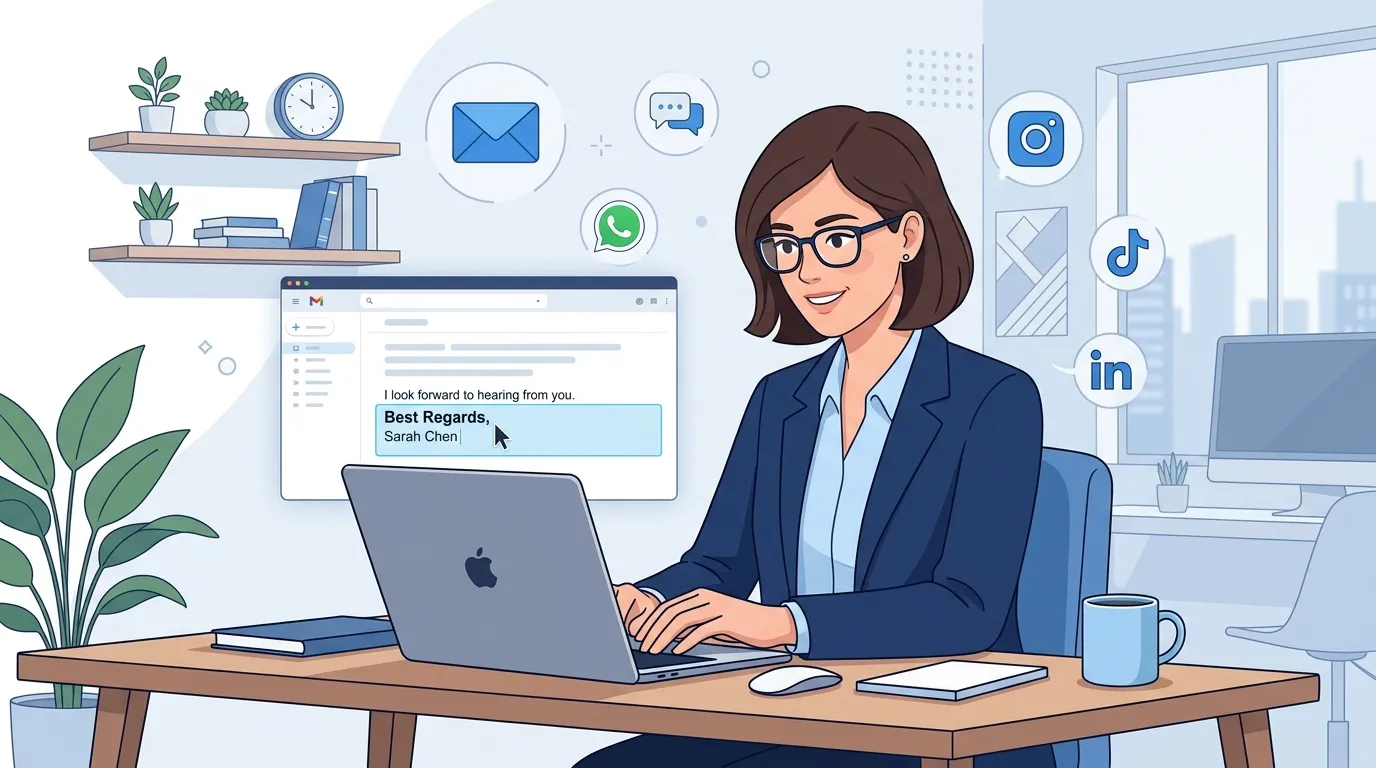
I still remember the first time I ended an important email with “Best Regards.” I had copied it from someone else because it looked professional, but I honestly had no idea what it really meant. After sending the email, I started wondering if I had used the right closing. Was it too formal? Too friendly?
Or was there a better option? That small moment made me curious, so I spent time learning when and how people use Best Regards in emails and messages. I quickly realized that this simple phrase can leave a lasting impression and help you sound polite, respectful, and confident.
Since then, I have used it in job applications, business emails, and everyday professional conversations without second-guessing myself. If you have ever felt unsure about ending an email the right way, you are not alone. In this guide, I will explain the Best Regards meaning, when to use it, when to avoid it, and how to make your emails sound more natural and professional.
Meaning & Definition of Best Regards
Best regards is a polite closing phrase used at the end of emails, letters, and other written messages. It expresses respect, kindness, and good wishes toward the person receiving the message.
In simple words, Best regards means:
- I wish you well.
- Sending my best wishes.
- Respectfully ending this message.
- A polite way to say goodbye.
Unlike casual endings such as See you or Take care, Best regards sounds more professional while still being warm and friendly.
Simple Example
Hi Sarah,
Thank you for your help with the project. I appreciate your quick response.
Best regards,
John
Here, the phrase politely closes the conversation without sounding too formal or too casual.
Tone of “Best Regards”
The phrase is generally:
- Professional
- Respectful
- Friendly
- Neutral
- Appropriate for most workplaces
Because of this balanced tone, it’s one of the most commonly used email sign-offs around the world.
Background of Best Regards
The phrase Best regards has been used in written correspondence for many decades. Long before email existed, people ended letters with respectful closings to show courtesy toward the recipient.
Traditional letter endings included phrases such as:
- Yours sincerely
- Yours faithfully
- Kind regards
- Warm regards
- Best wishes
As business communication moved from handwritten letters to email, Best regards became one of the preferred sign-offs because it sounds polite without being overly formal.
Today, professionals across many industries use it because it fits nearly every business situation.
Its popularity continues because it creates a respectful ending while remaining simple and easy to understand.
Usage in Different Contexts
The meaning of Best regards stays mostly the same, but the tone can feel slightly different depending on where it’s used.
Professional Emails
This is the most common place to use it.
Example:
- Business emails
- Job applications
- Client communication
- Customer support
- University emails
- Office discussions
Example:
Thank you for reviewing my application.
Best regards,
Emily
It shows professionalism without sounding distant.
Personal Emails
Friends and relatives sometimes use it when writing longer or more thoughtful emails.
Example:
I hope everything goes well with your new job.
Best regards,
Michael
Although less common than “Take care,” it’s still perfectly acceptable.
Customer Service
Businesses frequently use Best regards to end customer support emails because it sounds polite and respectful.
Example:
If you need additional assistance, please let us know.
Best regards,
Support Team
Academic Communication
Students often use Best regards when emailing professors or university staff because it demonstrates courtesy.
Example:
Thank you for your guidance regarding the assignment.
Best regards,
Alex
Best Regards Meaning in Chat, WhatsApp, Instagram, and TikTok
Unlike emojis or internet slang, Best regards is not commonly used in casual chats.
Chat
People usually choose shorter endings like:
- Thanks
- Bye
- Talk soon
However, if the conversation is work-related, Best regards is still appropriate.
In personal chats, it’s uncommon.
In business WhatsApp conversations, however, it appears frequently.
Example:
Thank you for your order.
Best regards,
Customer Service
On Instagram, people rarely end direct messages with Best regards because the platform is informal.
Brands, influencers, and businesses may use it when replying professionally.
TikTok
TikTok comments almost never include Best regards because users typically write very short and casual messages.
Businesses contacting creators through private messages may still use it.
Meaning in Physics, Medical, and Aircraft Terminology
Many people wonder whether Best regards has a technical meaning in specialized fields.
The answer is simple: it does not.
Physics
There is no scientific definition of Best regards in physics. It remains a standard email closing.
Medical Field
Doctors, hospitals, researchers, and healthcare professionals often end emails with Best regards, but it has no medical meaning.
Example:
Best regards,
Dr. Ahmed
Aircraft and Aviation
Pilots, airlines, engineers, and aviation companies also use Best regards in professional emails.
It is simply a courteous closing and not an aviation term.
Common Misconceptions
Several misunderstandings surround this phrase.
It Means Love
No.
Best regards expresses respect—not romance.
It’s Only for Business
Not true.
Although commonly used professionally, it can also appear in personal emails.
It’s Too Formal
Actually, it sits comfortably between formal and casual.
That’s one reason it remains so popular.
Older People Only Use It
People of all ages use Best regards, especially in workplaces.
Similar Terms & Alternatives
Sometimes another closing fits better.
Common alternatives include:
| Phrase | Tone |
| Kind regards | Friendly and professional |
| Warm regards | More personal |
| Regards | Neutral |
| Best | Short and modern |
| Best wishes | Friendly |
| Sincerely | Formal |
| Yours sincerely | Very formal |
| Thanks | Casual |
| Thank you | Appreciative |
| Take care | Personal |
Choosing the right one depends on your relationship with the recipient.
How to Respond to Best Regards
You don’t have to reply using exactly the same phrase.
Good responses include:
- Best regards
- Kind regards
- Warm regards
- Thank you
- Thanks again
- Sincerely
- Best wishes
If someone signs their email with Best regards, responding with Kind regards or Best regards is perfectly acceptable.
Example:
Thank you for your quick reply.
Best regards,
Lisa
Differences from Similar Words
Best Regards vs Regards
Best regards sounds warmer and more thoughtful.
Regards is shorter and slightly more neutral.
Best Regards vs Kind Regards
Both are polite.
Kind regards feels a little warmer and friendlier.
Best Regards vs Best Wishes
Best wishes often expresses personal encouragement or congratulations.
Best regards is more suitable for professional communication.
Best Regards vs Sincerely
Sincerely is more formal and often used in official letters.
Best regards is suitable for everyday professional communication.
Relevance in Online Conversations & Dating Apps
On dating apps like Tinder, Bumble, or Hinge, Best regards is rarely used because conversations are usually casual.
Using it may sound:
- Overly formal
- Business-like
- Unnatural
Example:
Nice talking with you.
Best regards.
While polite, it may feel awkward in a dating conversation.
In professional networking platforms such as LinkedIn, however, it fits perfectly.
Example:
Thank you for connecting.
Best regards,
Daniel
FAQs:
1. What does Best Regards mean?
It is a polite closing phrase that expresses respect and good wishes at the end of a message or email.
2. Is Best Regards formal or informal?
It is considered semi-formal. It works well in professional communication while remaining friendly.
3. Can I use Best Regards in emails?
Yes. It is one of the safest and most widely accepted email sign-offs for business, academic, and professional messages.
4. Is Best Regards appropriate for friends?
Yes, although many friends prefer more casual closings like “Take care” or “See you soon.”
5. What is the difference between Best Regards and Kind Regards?
Both are polite. Kind regards feels slightly warmer, while Best regards is more neutral and professional.
Conclusion
Understanding the best regards meaning helps you communicate with confidence in both professional and personal situations. It is a respectful, friendly, and versatile closing that works well in emails, letters, customer service messages, academic communication, and business conversations.
Although it is less common on social media and dating apps, it remains one of the most trusted ways to end formal or semi-formal messages. By knowing when to use it and when another sign-off may be more suitable, you can create a positive final impression every time you write.
If you’re applying for a job, replying to a client, or thanking a colleague, Best regards remains a timeless and effective way to close your message politely.