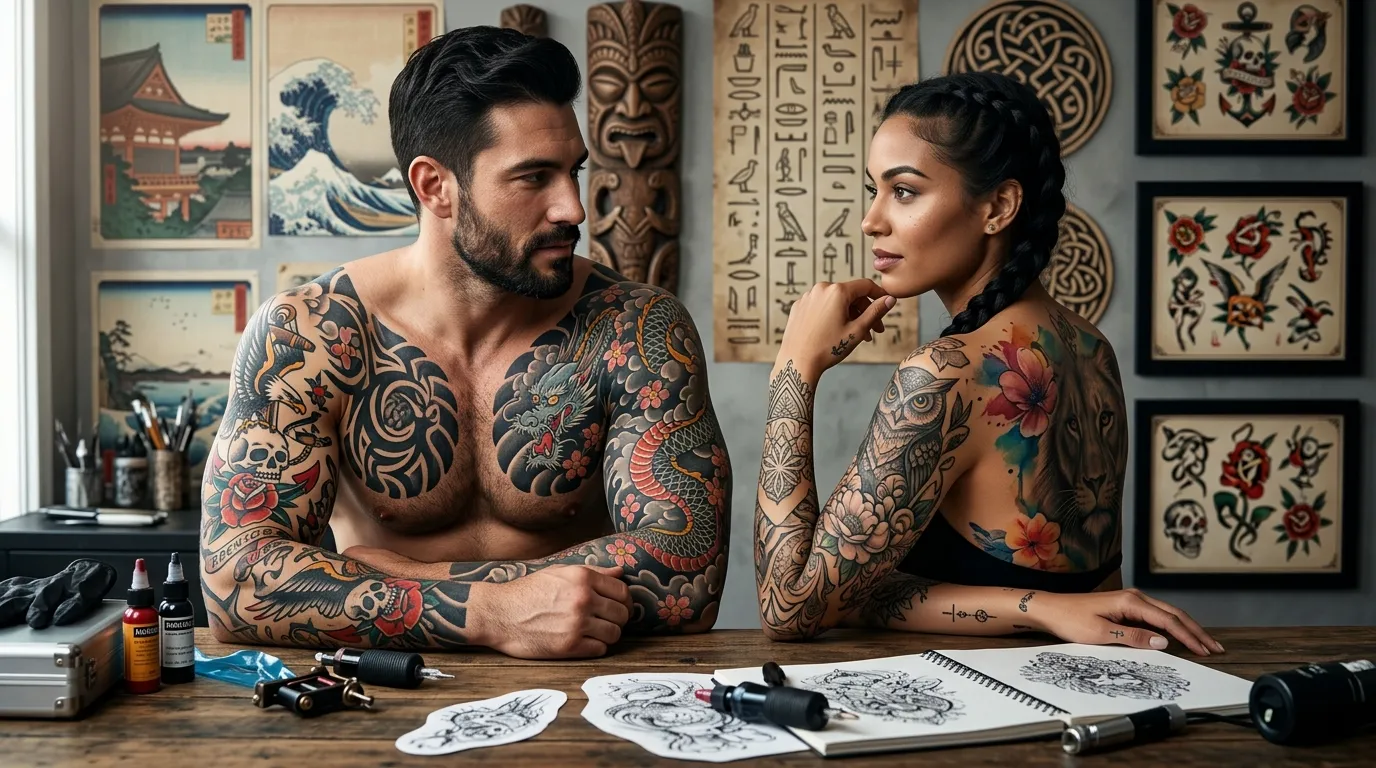
I still remember the day I decided to get my first tattoo. I thought choosing a design would be the hardest part, but I quickly realized there was something even more important: finding the right tattoo style. As I explored different options, I discovered that every style had its own history, culture, and meaning. Some represented strength, while others symbolized love, protection, or personal growth.
That journey completely changed the way I looked at tattoos. Instead of picking a design just because it looked cool, I chose one that truly reflected my story.
If you’re feeling confused like I once was, you’re in the right place. In this guide, I’ll walk you through the best tattoo styles, where they came from, and what they mean, so you can choose a tattoo that not only looks amazing but also carries a deeper personal meaning you’ll appreciate for years to come.
Meaning & Definition
Tattoo styles are unique artistic methods for creating tattoos. Each style follows specific techniques, color palettes, line work, shading methods, and design principles that distinguish it from others.
Unlike simply choosing a tattoo design, selecting a tattoo style determines the artwork’s overall appearance and emotional impact. For example, a rose can look completely different when created in Traditional American style compared to Realism or Watercolor.
Some of the most popular tattoo styles include:
- Traditional (Old School)
- Neo Traditional
- Japanese (Irezumi)
- Tribal
- Realism
- Blackwork
- Minimalist
- Fine Line
- Watercolor
- Geometric
- Dotwork
- Illustrative
Each style carries different meanings and reflects various cultures, artistic movements, and historical traditions.
Tattoo styles continue evolving as artists combine traditional techniques with modern creativity, producing unique interpretations that appeal to people worldwide.
Background
Tattooing dates back more than 5,000 years. Ancient civilizations used tattoos for spiritual protection, religious ceremonies, social status, healing practices, and personal identity.
Tribal Tattoos
Among the oldest tattoo traditions are tribal tattoos from Polynesia, Samoa, New Zealand, Africa, and Native American cultures. These tattoos often represented family heritage, bravery, achievements, and community identity.
Japanese Irezumi
Japanese tattooing developed over centuries with detailed artwork featuring dragons, koi fish, tigers, cherry blossoms, and mythical creatures. Every image carries symbolic meaning related to courage, perseverance, wisdom, protection, or transformation.
Traditional American
American Traditional tattoos became popular among sailors during the 18th and 19th centuries. Common designs included anchors, swallows, ships, eagles, roses, and hearts. These symbols often represented safe travel, loyalty, love, and patriotism.
Modern Styles
The late 20th century introduced styles such as:
- Realism
- Watercolor
- Geometric
- Fine Line
- Sketch Style
- Abstract
- Illustrative
Modern tattoo artists combine digital design techniques with traditional craftsmanship, allowing nearly unlimited creative possibilities.
Today, tattoos are accepted as personal art rather than symbols of rebellion in many societies.
Usage in Different Contexts (Chat, Social Media, Professional Fields)
Tattoo styles are discussed differently depending on the audience.
Everyday Conversations
Friends often ask:
- What tattoo style do you like?
- Is realism better than traditional?
- Which style ages best?
These conversations usually focus on personal taste.
Social Media
Platforms like Instagram, Pinterest, TikTok, and Facebook showcase millions of tattoo designs.
Popular hashtags include:
- #FineLineTattoo
- #TattooIdeas
- #Blackwork
- #MinimalTattoo
- #TattooInspiration
Artists use social media to display portfolios, explain tattoo meanings, and educate clients.
Professional Fields
Professional tattoo studios discuss styles using technical terms like:
- Saturation
- Needle configuration
- Line weight
- Color packing
- Shading
- Composition
Art schools may also study tattoo styles as part of modern visual arts.
Meaning in Chat, WhatsApp, Instagram, TikTok
On messaging apps and social platforms, tattoo style discussions are usually casual.
Examples include:
“I’m thinking about getting a fine line tattoo.”
“This blackwork sleeve looks amazing.”
TikTok
“Watercolor tattoos are beautiful but require an experienced artist.”
Tattoo trends spread quickly through short videos, artist tutorials, before-and-after transformations, and client experiences.
Influencers frequently share healing updates, tattoo care routines, and style recommendations.
Dating profiles may also mention tattoos as part of someone’s personality or lifestyle.
Meaning in Physics, Medical, and Aircraft Terminology
The phrase best tattoo styles and their origins and meaning does not have official technical definitions in physics, medicine, or aviation. However, the word “tattoo” appears in specialized contexts.
Physics
Tattoo styles have no scientific meaning in physics.
Medical
Medical tattoos are used for:
- Radiation therapy alignment
- Scar camouflage
- Nipple reconstruction
- Cosmetic permanent makeup
- Medical identification
These tattoos prioritize function rather than artistic style.
Aircraft
In aviation, tattoo styles have no recognized technical meaning.
Occasionally, aircraft crews or military personnel choose tattoos that represent their service, squadrons, aircraft, or missions, but these are personal expressions rather than aviation terminology.
Common Misconceptions
Many myths surround tattoo styles.
Myth 1
All tattoos have the same meaning.
Reality: Meaning depends on the design, culture, and individual interpretation.
Myth 2
Traditional tattoos are outdated.
Reality: Traditional American tattoos remain among the most respected styles worldwide.
Myth 3
Watercolor tattoos never last.
Reality: Properly executed watercolor tattoos can remain attractive for many years, though they may require touch-ups.
Myth 4
Fine line tattoos are always painless.
Reality: Pain depends more on body placement than tattoo style.
Myth 5
Tribal tattoos are just decorative.
Reality: Authentic tribal tattoos often represent centuries of cultural heritage and identity.
Similar Terms & Alternatives
People often use related terms when discussing tattoos.
Common alternatives include:
- Tattoo designs
- Tattoo artwork
- Ink styles
- Body art
- Tattoo techniques
- Tattoo aesthetics
- Tattoo genres
- Tattoo traditions
- Tattoo patterns
- Tattoo themes
Although these terms are related, they do not always describe the same artistic concepts.
How to Respond to It
If someone asks about tattoo styles, your response depends on the conversation.
Examples:
“I prefer realism because it looks like a photograph.”
“I love Japanese tattoos because of their symbolism.”
“Minimalist tattoos fit my personality.”
“I recommend researching the history before choosing a cultural tattoo.”
When giving advice, encourage people to:
- Research the style.
- Find an experienced artist.
- Understand the symbolism.
- Think about long-term satisfaction.
- Follow proper aftercare instructions.
Respectful conversations help people make informed tattoo decisions.
Differences from Similar Words
Many people confuse tattoo styles with other tattoo-related terms.
| Term | Meaning |
| Tattoo Style | The artistic technique used to create a tattoo. |
| Tattoo Design | The actual image or illustration. |
| Tattoo Symbol | The object or icon being tattooed. |
| Tattoo Theme | The overall concept connecting multiple tattoos. |
| Tattoo Placement | The body location where the tattoo is applied. |
Understanding these differences makes it easier to communicate with tattoo artists and choose the right artwork.
Relevance in Online Conversations & Dating Apps
Tattoo discussions are increasingly common online.
Many people include tattoos in:
- Dating profiles
- Personal bios
- Lifestyle discussions
- Art communities
- Fashion content
On dating apps, tattoos often become conversation starters.
Examples include:
“What inspired your sleeve tattoo?”
“Which tattoo style is your favorite?”
“Did your tattoo have a personal meaning?”
Online communities also discuss healing experiences, artist recommendations, style comparisons, and tattoo trends.
For many people, tattoos represent creativity, confidence, self-expression, and life experiences rather than simply decoration.
FAQs:
1. Which tattoo style lasts the longest?
Traditional, Japanese, and Blackwork tattoos generally age very well because of their bold lines and strong contrast.
2. What is the most popular tattoo style today?
Fine Line, Minimalist, Realism, Blackwork, and Japanese tattoos are among the most popular styles worldwide.
3. Do all tattoo styles have meanings?
Not necessarily. Some styles are chosen purely for artistic appearance, while others have deep cultural, historical, or personal significance.
4. Which tattoo style is best for beginners?
Minimalist and Fine Line tattoos are often recommended for first-time clients because they are typically smaller and simpler, though the best choice depends on personal preference.
5. Can different tattoo styles be combined?
Yes. Skilled artists often blend styles, such as Realism with Geometric elements or Traditional with Illustrative techniques, to create unique custom designs.
Conclusion
Understanding the best tattoo styles, their origins, and meanings helps you appreciate tattoos as more than mere body decoration. Every style reflects a unique artistic tradition, historical background, and symbolic value that has evolved across cultures and generations.
If you’re drawn to the bold appearance of Traditional tattoos, the intricate storytelling of Japanese Irezumi, the precision of Fine Line work, or the creativity of Watercolor designs, choosing a style should involve thoughtful research and personal meaning.
A well-chosen tattoo becomes a lasting expression of identity, memories, beliefs, or creativity. By learning about each style’s origins, symbolism, and modern applications, you can confidently select artwork that remains meaningful for years to come while respecting the cultural heritage behind many tattoo traditions.