I still remember the first time someone replied to my message with the word “boi.” At first, I paused and wondered if it was just a spelling mistake or if it had a completely different meaning. I didn’t want to guess, so I decided to look it up and see how people were actually using it online.
After reading conversations on social media and chatting with friends, I realized that “boi” is an internet slang word often used in a fun, playful, or humorous way. It can refer to a boy, a close friend, or even be used to express surprise, excitement, or sarcasm, depending on the situation.
Once I understood the context, it became much easier to recognize when people were joking and when they were simply being friendly. If you’ve ever seen “boi” in a text, meme, or social media post and felt confused like I did, don’t worry. In this guide, I’ll explain what “boi” means, how people use it, and when it’s appropriate to use it yourself.
What Does Boi Mean? – Quick Meaning
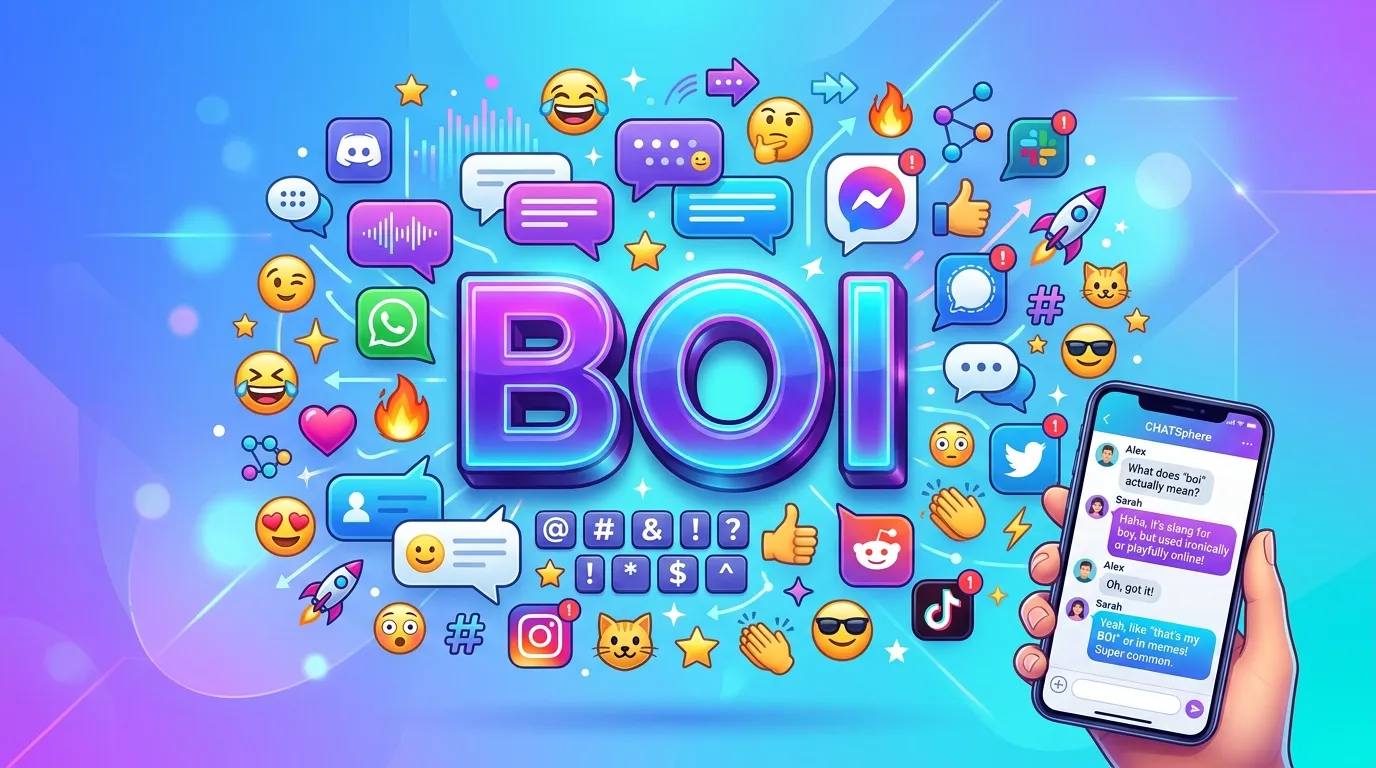
The term boi is an informal slang spelling of “boy” that is commonly used online. It can describe a young male, a friend, a playful nickname, or a humorous expression depending on the context.
In simple words, boi means “boy” but with a more casual, funny, or internet-style feeling.
Common examples of how people use “boi”:
- Talking to a friend: “Hey boi, what are you doing?”
- Showing surprise: “Boi, that was unexpected!”
- Making a joke: “This boi really thought he could win.”
- Reacting to a funny moment: “Oh boi, here we go again.”
- Using internet humor: “That boi is talented.”
The meaning of boi is not always serious. Most of the time, it creates a relaxed, playful, or meme-like tone.
Origin & Background of Boi
The word boi developed from the everyday word “boy,” but its journey is connected to internet culture, slang communities, and creative online communication.
People have changed the spelling of common words for many years to create different personalities, emotions, or styles. Similar examples include “kewl” instead of “cool” or “thx” instead of “thanks.” In the same way, “boi” became a stylized version of “boy.”
The term became more popular through online forums, gaming communities, memes, and social media platforms. Internet users often used “boi” in humorous captions and reaction posts because the unusual spelling made conversations feel more playful.
Over time, the meaning expanded. While some people use it simply as a funny replacement for “boy,” others use it within specific communities to express identity, personality, or social connection.
Today, boi is widely recognized as internet slang. It appears in:
- Social media comments
- Online games
- Meme culture
- Text messages
- Casual conversations
The importance of understanding boi comes from the fact that online language changes quickly. A word that looks simple can carry different meanings depending on the community using it.
Real-Life Conversations Using Boi
The meaning of boi becomes clearer when you see how people use it in everyday situations.
WhatsApp Chat Example
Friend 1: “Boi, you won the match again?”
Friend 2: “Yeah, I got lucky this time.”
Here, boi is used as a friendly way to address someone.
Instagram DM Example
Person 1: “Boi, this picture looks amazing!”
Person 2: “Haha, thanks!”
In this situation, boi adds excitement and a playful reaction.
TikTok Comment Example
Comment: “This boi just broke the internet 😂”
Here, boi is used in a humorous way to describe someone doing something impressive or surprising.
Friends Talking Example
Friend 1: “Boi, you really ate the whole pizza yourself?”
Friend 2: “I was hungry!”
In casual conversations, boi can make a statement sound funny or teasing.
Emotional & Psychological Meaning of Boi
Although boi is a small slang word, it can carry different emotions depending on the situation.
Many people use boi because it creates a sense of friendliness and connection. When someone calls their friend “boi,” it often feels less formal than saying “friend” or using someone’s name.
The emotional meanings behind boi can include:
Humor
Boi is commonly connected with jokes and memes. It can make a sentence sound more entertaining and less serious.
Example:
“Boi, what was that move?”
This shows surprise mixed with amusement.
Friendship
Among close friends, boi can create a relaxed feeling. It may show comfort and familiarity between people.
Surprise
People often use boi when reacting to something unexpected.
Example:
“Boi, I did not see that coming.”
Playfulness
The unusual spelling gives the word a fun internet personality. It often makes conversations feel casual and energetic.
However, the emotional meaning depends on tone. A friendly message may feel funny, while the same word from a stranger could feel confusing or inappropriate.
Usage in Different Contexts
The word boi appears in many different online and offline situations. Its meaning changes slightly depending on where it is used.
Social Media
On platforms like Instagram, TikTok, and X, boi is often used in comments, captions, and memes.
Examples:
- “This boi is unstoppable.”
- “Boi really did that.”
Social media users often choose boi because it feels more humorous than the normal spelling “boy.”
Friends & Family
Among friends, boi can be a casual nickname. It usually shows a relaxed relationship.
Example:
“Hey boi, are you coming tonight?”
In some families or friend groups, people may use it as a playful greeting.
Professional Settings
Boi is generally not suitable for formal communication.
Avoid using it in:
- Business emails
- Job applications
- Professional reports
- Workplace messages with unfamiliar people
A professional setting usually requires standard language.
Casual Conversation
In everyday conversations, boi can replace “boy” when people want to sound funny or relaxed.
Example:
“Boi, you need to see this movie.”
Online Communities
Gaming groups, meme pages, and online forums often use boi frequently.
In these spaces, the word helps create a shared internet style and friendly atmosphere.
Common Misunderstandings About Boi
Because slang changes over time, people often misunderstand the meaning of boi.
1. Boi Is Always a Typo
Wrong idea: Some people think boi is only a spelling mistake.
Correct meaning: Many users intentionally write boi to create a funny or casual tone.
2. Boi Always Means a Young Male
Wrong idea: It only refers to a boy.
Correct meaning: Online, boi can refer to a person, character, pet, or even something funny.
Example:
“This little boi is adorable.”
3. Boi Is Always Serious
Wrong idea: The word has a fixed definition.
Correct meaning: Boi is usually playful and depends heavily on context.
4. Everyone Uses Boi the Same Way
Wrong idea: The meaning is identical everywhere.
Correct meaning: Different internet communities may use boi differently.
5. Boi Is Appropriate Everywhere
Wrong idea: It can be used in any conversation.
Correct meaning: Boi works best in casual settings, not formal communication.
Boi vs Similar Terms: Comparison Table
| Term | Meaning | Difference |
| Boi | Playful internet version of “boy” | More casual, humorous, and online-focused |
| Boy | A male child or young man | Standard English word |
| Dude | A casual way to address someone | More gender-neutral than boi |
| Bro | Friendly term for a close person | Often suggests friendship or brother-like connection |
| Guy | Informal term for a person, usually male | More common in everyday speech |
| Bruh | Internet slang showing surprise or disbelief | Often used as a reaction rather than a name |
Types / Variations of Boi
The word boi has developed several variations across internet culture. These versions can slightly change the tone, meaning, or feeling behind the expression.
1. Good Boi
A cute or positive way to describe someone, a pet, or a person doing something well.
2. Bad Boi
A playful phrase used for someone acting rebellious, confident, or mischievous.
3. Lil Boi
A shortened, cute version often used for small people, animals, or funny situations.
4. Big Boi
A humorous way to describe someone who is older, larger, more confident, or acting mature.
5. Smart Boi
Used jokingly or positively for someone who says something clever or intelligent.
7. Sad Boi
A slang phrase for someone expressing sadness, emotional feelings, or dramatic behavior online.
8. Gamer Boi
Used for someone who enjoys video games or spends a lot of time in gaming communities.
9. Meme Boi
A humorous label for someone connected with jokes, memes, or internet humor.
10. Real Boi
A phrase used online to show approval, authenticity, or agreement with someone’s actions.
These variations show how flexible internet slang can be. People often change words to match their emotions, humor, or online personality.
How to Respond When Someone Says Boi
The best response depends on the situation, relationship, and tone of the conversation. Since boi is usually casual slang, your reply can also be relaxed.
Casual Replies
If a friend uses boi in a normal conversation, you can respond naturally:
- “Haha, what’s up?”
- “Yeah, tell me.”
- “What happened?”
- “I’m listening.”
These replies keep the conversation friendly.
Funny Replies
When someone uses boi as a joke, you can match their humor:
- “Boi, you already know the answer.”
- “Oh no, what did I do now?”
- “Here we go again 😂”
- “That sounds like trouble.”
Funny replies work well in chats, comments, and memes.
Smart Replies
If someone uses boi while discussing something interesting, you can answer thoughtfully:
- “Interesting point. I never looked at it that way.”
- “That actually makes sense.”
- “Good observation.”
Respectful Replies
If you are unsure about someone’s tone, keep your response polite:
- “Haha, I understand.”
- “Thanks for sharing.”
- “I see what you mean.”
A respectful reply helps avoid misunderstandings, especially when talking with someone you do not know well.
Regional & Cultural Usage of Boi
The meaning and popularity of boi can change depending on location and online culture. Since internet slang spreads globally, people from different countries may use it in unique ways.
USA / Western Countries
In the United States and other Western countries, boi is commonly seen in memes, social media posts, gaming chats, and casual conversations.
Many users use it as a funny replacement for “boy” or as a reaction word.
Example:
“Boi, that was an incredible comeback.”
The word is especially common among younger internet users who enjoy meme culture.
Europe
Across Europe, boi is mostly understood through online platforms rather than traditional language.
Many younger users encounter it through:
- TikTok videos
- Gaming communities
- Social media trends
- English-language memes
Because English internet culture is widespread, boi has become familiar in many European online spaces.
Asia
In Asian countries, especially among younger internet users, boi is often used in online conversations influenced by global social media.
It may appear in:
- Gaming groups
- Fan communities
- Comment sections
- Messaging apps
The meaning is usually playful rather than literal.
Middle East
In the Middle East, many young internet users understand boi through platforms like TikTok, Instagram, and YouTube.
It is generally used in English-language online spaces and often carries a humorous or casual meaning.
Global Internet Culture
Today, boi is part of worldwide digital communication. Memes, videos, and online communities allow slang words to travel quickly between countries.
However, the meaning always depends on context. A word that feels funny in one community may feel unusual in another.
FAQs
1. What does boi mean in texting?
In texting, boi usually means a playful version of “boy.” People use it to address friends, react to situations, or make messages sound funnier and more casual.
2. Is boi the same as boy?
Boi and boy are related, but they are not exactly the same. “Boy” is the standard English spelling, while “boi” is a slang version often used for humor, internet culture, or casual conversations.
3. Why do people write boi instead of boy?
People write boi because it creates a different style and feeling. The unusual spelling often makes messages sound more playful, funny, or connected to online culture.
4. Can boi be used for girls or other people?
Yes, in some online communities, boi is not always limited to males. Depending on the context, it can be used as a nickname, joke, or identity-related term.
5. Is boi appropriate for professional conversations?
Usually, no. Boi is informal slang and is better suited for friends, social media, gaming chats, and casual messages rather than workplace communication.
6. Does boi have a negative meaning?
Most of the time, boi does not have a negative meaning. However, like many slang terms, its meaning depends on the speaker, situation, and tone being used.
Conclusion
Understanding what does boi means helps you recognize how modern internet slang works. While the word started as a playful variation of “boy,” it has grown into a flexible expression used in memes, social media, gaming, and everyday chats.
For most people, boi represents humor, friendliness, surprise, or a relaxed online style. It can be a funny way to address someone, describe a situation, or add personality to a message.
The key thing to remember is that slang depends on context. The same word can feel different depending on who says it and where it appears.
Whether you see boi in a TikTok comment, a WhatsApp message, or a meme, you can now understand the meaning behind it. Internet words may change quickly, but knowing their context helps you communicate confidently in the digital world.