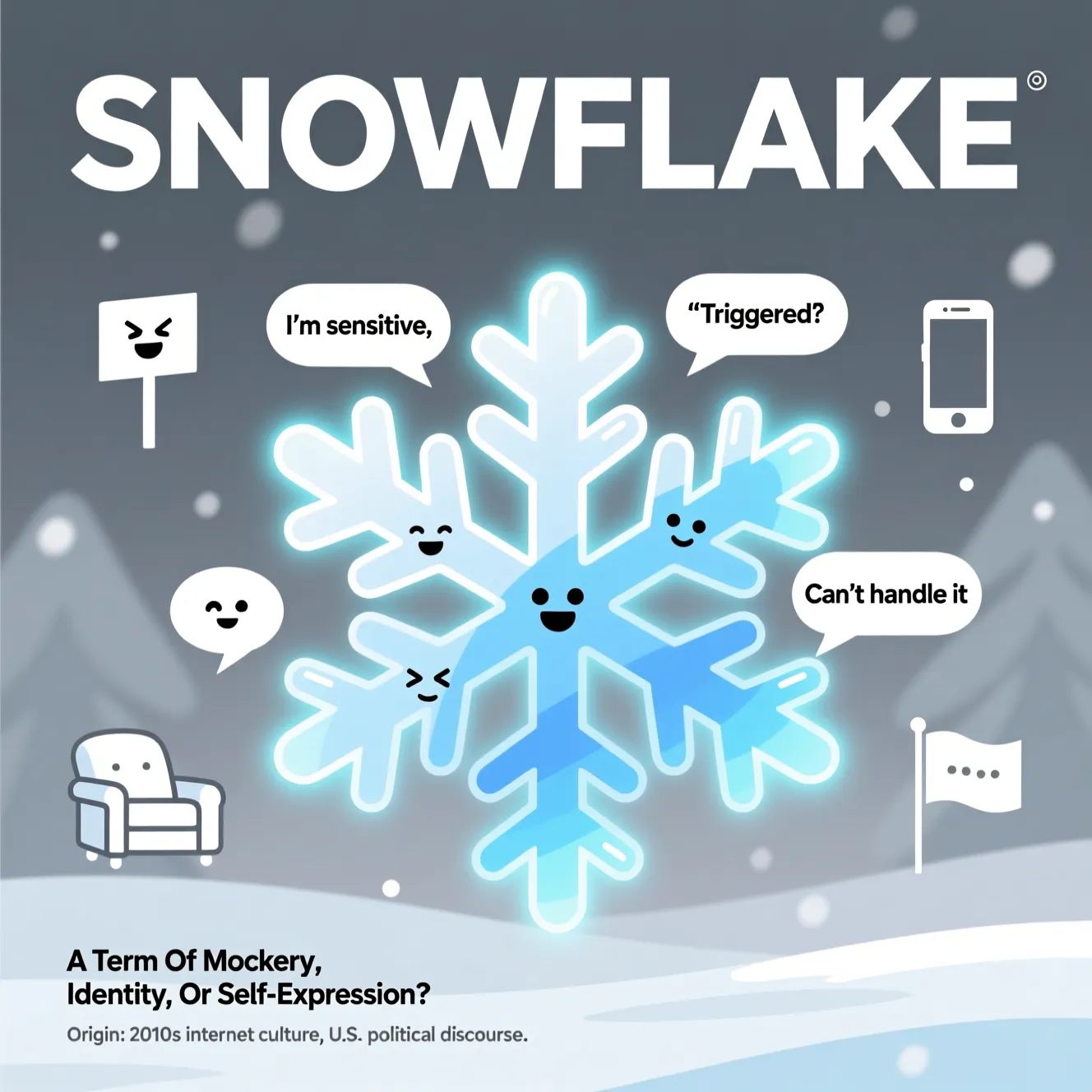
Snowflake is a slang term used to describe someone who is seen as overly sensitive, easily offended, or unable to handle opposing opinions. In online conversations, it’s often used sarcastically or critically, depending on the tone and context.
Many users search for snowflake slang meaning after seeing it on social media, memes, political discussions, or comment sections. The user intent is clear: they want a quick, clear explanation of what “snowflake” means in slang and how it’s commonly used today.
In this guide, you’ll learn the real meaning of snowflake slang, where it comes from, and how people use it in casual and online conversations. The explanation uses simple words, short paragraphs, and is easy to understand for beginners.
What Does Snowflake Mean in Text?
In slang, “snowflake” usually refers to someone who is seen as overly sensitive, easily offended, or unable to handle criticism or opposing opinions.
The term comes from the idea that every snowflake is unique and delicate, which online slang turned into a sarcastic label for people who expect special treatment or react strongly to things others see as minor.
Simple meaning:
Snowflake (slang): A person who is perceived as too sensitive, emotionally fragile, or offended easily.
Important note:
- It is not a compliment in slang use.
- The meaning depends heavily on tone, context, and relationship.
- It’s often used mockingly or dismissively.
In some cases, people also use it ironically or jokingly among friends, but without that familiarity, it can feel insulting.
Where Is Snowflake Used?
The slang term snowflake is most commonly used online rather than in face-to-face conversations.
You’ll often see it on:
- X (Twitter) – political or opinion-based debates
- TikTok comments – reaction videos, arguments, or jokes
- Instagram & Facebook – comment sections and memes
- Reddit – discussions, especially controversial ones
- Texting & group chats – usually sarcastic or teasing
Who uses it most?
- Teens and young adults
- People involved in online debates or meme culture
- Users commenting on social, political, or cultural topics
It’s especially common in arguments, where someone wants to dismiss another person’s reaction rather than engage with it.
Examples of Snowflake in Conversation
Here are some realistic ways snowflake appears in everyday chats and online comments:
- Friendly teasing
“Relax, it was just a joke. Don’t be a snowflake 😂” - Argument or debate
“Anyone who disagrees is instantly labeled a snowflake.” - Sarcastic reply
“Oh no, a different opinion—careful, the snowflakes are melting.” - Playful among friends
“You won’t eat spicy food? Such a snowflake 😜” - Online comment
“People are too sensitive these days. Total snowflake behavior.” - Self-aware joke
“Guess I’m a snowflake because that movie made me cry.” - Flirty but risky
“Didn’t know you were a snowflake 😉”
(This can easily be misread—use caution.)
When to Use and When Not To Use Snowflake
✅ When it might be okay:
- With close friends who understand your humor
- In joking or ironic contexts
- When referring to yourself in a self-deprecating way
- In meme culture or casual online banter
❌ When NOT to use it:
- At work or in professional chats
- With people you don’t know well
- During serious conversations or emotional moments
- In school discussions, emails, or formal writing
- When trying to flirt (it often backfires)
💡 Important: Calling someone a snowflake can easily sound dismissive or disrespectful, even if you don’t mean it that way.
Similar Slang Words or Alternatives
Here are a few slang terms related to snowflake, with quick explanations:
- Soft – Someone seen as emotionally weak or sensitive
- Triggered – Reacting emotionally to a topic (often sarcastic online)
- Karen – A person perceived as entitled or overly demanding
- Crybaby – Someone who complains or gets upset easily
- Sensitive much? – A sarcastic phrase implying overreaction
Each of these carries its own tone and should also be used carefully.
FAQs
What does snowflake mean from a girl?
It usually means she thinks someone is being too sensitive or dramatic, though tone matters. It can be teasing or annoyed.
Is snowflake slang rude?
Often, yes. It’s usually dismissive and can feel insulting depending on context.
Can I use snowflake in professional chats?
No. It’s considered too casual and disrespectful for work or formal communication.
Does snowflake have any flirty meaning?
Not really. Using it flirtatiously is risky and often comes across as rude rather than playful.
Is snowflake still popular in 2025?
Yes. It’s still widely used online, especially in comments, debates, and meme culture.
Conclusion
So, what’s the takeaway?
The snowflake slang meaning refers to someone seen as overly sensitive or easily offended, usually said in a sarcastic or mocking way. While it’s common in online chats, memes, and debates, it’s not a neutral term and can quickly come off as rude if used carelessly.
If you’re joking with close friends or poking fun at yourself, it can work. But in professional, serious, or unfamiliar settings, it’s best to skip it.
👉 Simple rule: If there’s even a small chance it could offend someone, don’t use it.